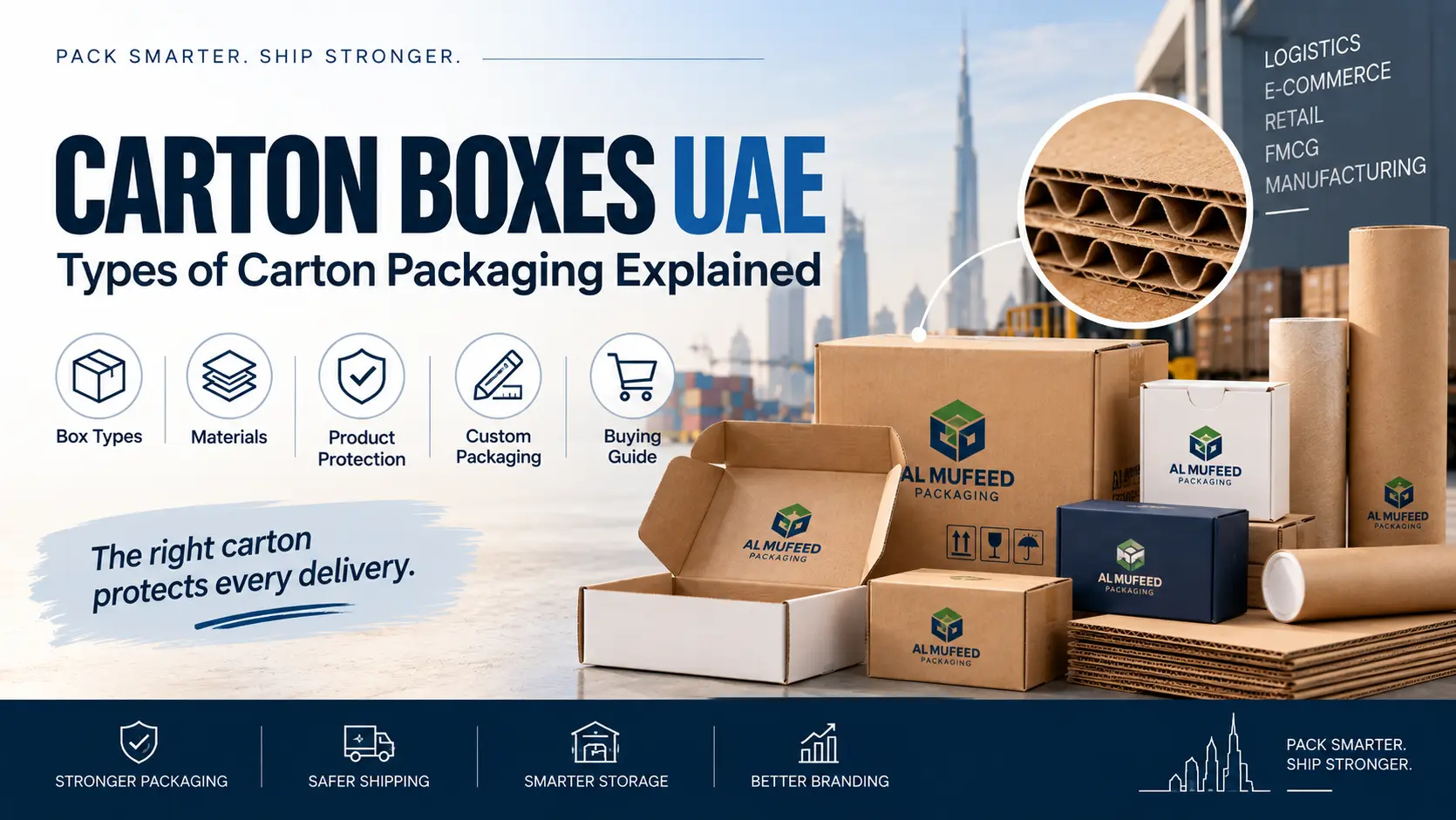
Look at almost anything you’ve bought online, picked up from a pharmacy or unwrapped as a gift, and it probably arrived in a carton. Carton boxes are one of the most widely used packaging formats in the world. They protect products in transit, carry a brand’s identity and keep supply chains moving. They are also cost-effective and recyclable.
Whether you run a small online store or manage logistics for a large manufacturer, the carton you choose affects product safety, shipping costs, customer experience and environmental impact. This guide explains what a carton box is, how it’s made and the main types of carton packaging, so you can choose with confidence.
What Is a Carton Box?
A carton box, also called a cardboard box or paperboard box, is a container made from thick, paper-based material. Most cartons use one of two materials:
- Paperboard: a thick, rigid paper sheet, often used for retail packaging.
- Corrugated fiberboard: a fluted (wavy) paper layer sandwiched between two flat linerboards. The flutes act like tiny arches that absorb pressure, which is why corrugated cartons are strong for their weight.
To see how this layered material is made, look at our corrugated cardboard sheets. The same sheets are the starting point for many of the boxes in this guide. For long production runs, we also supply corrugated rolls used for wrapping and protective packing.
Carton boxes package and ship almost everything: electronics, clothing, food, cosmetics, household goods and industrial parts. They come in countless shapes and sizes, and they can carry printed designs, logos, product information and handling instructions.
Carton Box vs. Cardboard Box: Is There a Difference?
In everyday use the terms overlap, and most people treat “carton box,” “cardboard box” and “box carton” as the same thing. In the packaging industry, “carton” often means a lighter paperboard container for retail products, such as a cereal box or medicine pack. “Cardboard box” usually describes the heavier corrugated boxes used for shipping and storage. Many suppliers sell both, so you’ll often see the words used together.
Why Carton Boxes Matter in Modern Commerce
Carton packaging has stayed popular for good reasons.
1. Protection. A well-chosen carton shields goods from shock, vibration, moisture, dust and compression during storage and transport. That means fewer damaged products and returns, and happier customers. Our guide to corrugated box strength explains what makes a box hold up.
2. Cost-effectiveness. Cardboard packaging is lightweight, which keeps shipping costs down. Cartons are usually flat-packed before use, so they take little warehouse space. Buying bulk cardboard boxes lowers the cost per unit further, and our tips on reducing packaging costs show where else you can save.
3. Branding. A carton is often the first thing a customer touches. Printing, embossing and finishing turn plain packaging into a marketing tool.
4. Versatility. From a tiny carton for lip balm to a heavy-duty box for machine parts, one material covers a huge range of needs.
5. Sustainability. Paper-based packaging is widely recyclable, and many cartons contain recycled fibre. You can read more about how cardboard contributes to a circular economy and why sustainable packaging matters to modern brands.
If you want the full list of advantages, see our posts on the benefits of corrugated packaging and 10 advantages of using corrugated boxes.
Types of Carton Packaging
Carton packaging isn’t one product. Each type below suits different products, budgets and brand goals.
1. Corrugated Boxes
Corrugated boxes are the most commonly used carton packaging in the world. They are made from multiple layers of paperboard with a fluted middle layer, which gives them strength and durability.
Best for: heavy, bulky or fragile items such as appliances, glassware, machinery parts and e-commerce shipments.
Key benefits:
- Excellent protection against shock, vibration and compression
- Available in single-wall, double-wall and triple-wall construction, depending on how much weight the box must carry
- Easy to print on, cut and customise
- Fully recyclable
Single-wall boxes suit lighter parcels. Double-wall and triple-wall options add layers of flutes for heavy loads and long-distance shipping. Not sure which you need? Our comparison of single wall vs double wall corrugated boxes walks through the decision, and our guide to corrugated box sizes helps you pick the right dimensions.
These boxes are the standard choice for cardboard packing boxes, used for moving house, warehouse storage and shipping orders. Many businesses buy them in volume as bulk cardboard boxes to cut costs. To see our range, visit our corrugated carton box manufacturer page.
2. Folding Cartons
Folding cartons are made from a single sheet of paperboard that is cut, creased and folded into shape. They ship flat and are assembled at the packing line, so they save storage and transport space.
Best for: lightweight consumer products such as food, pharmaceuticals, cosmetics, toiletries and small electronics.
Key benefits:
- Smooth surface that gives high-quality printing
- Easy to customise with embossing, foil stamping, spot UV and window cut-outs
- Lightweight and economical at scale
- Strong shelf appeal
Folding cartons are the classic retail box. Cereal, toothpaste, perfume and tablet packs all use this style, and shoppers judge a product partly by its packaging, so they are a powerful tool for brand storytelling. Industry-specific guides cover pharmaceutical packaging, cosmetic packaging and food packaging boxes in more depth. Folding cartons are often built from duplex board, and our duplex board pasting service covers that process.
3. Rigid Boxes
Rigid boxes, also called luxury boxes or gift boxes, are made from much thicker and more durable paperboard than folding cartons. They are not shipped flat. They arrive fully assembled and hold their shape.
Best for: premium products such as jewellery, watches, high-end electronics, perfumes and luxury gifts.
Key benefits:
- A premium look and feel that raises the perceived value of the product
- Great structural strength
- Endless design options, including custom shapes, magnetic closures, ribbons, foil and soft-touch finishes
- Interior inserts that hold the product securely
The trade-off is cost and storage. Rigid boxes cost more per unit and take up more space, so they suit products where presentation matters as much as protection.
4. Set-Up Boxes
Set-up boxes are close relatives of rigid boxes but easier to assemble. They are made from thick paperboard and usually come with a removable lid, which makes them ideal for items that customers open and close often.
Best for: shoes, gift sets, apparel, small electronics and display packaging.
Key benefits:
- Sturdy construction with a reusable lid
- Good for presentation and gifting
- Reusable by the customer, which extends the life of your branding
If you sell footwear, cardboard shoe boxes are the most familiar example. They are sturdy enough to protect shoes during shipping and storage, and a branded lid turns an ordinary box into part of the unboxing experience.
5. Tubes
Tubes are cylindrical cartons, usually made from paperboard or heavy cardboard. They come with various closures, such as metal or plastic end caps, or friction-fit ends.
Best for: posters, maps, documents, blueprints, artwork and cylindrical products such as candles or cosmetics.
Key benefits:
- Protect long, flat items from creasing or bending
- Distinctive shape that stands out on shelves
- Easy to print or label for branding
The same idea underlies cardboard rolls, which are used in packaging and manufacturing as protective cores and wrapping material. Our corrugated rolls are widely used to wrap and cushion products in transit.
6. Die-Cut and Multi-Depth Boxes
Die-cut boxes are cut with a custom die into a specific shape, so they fold into precisely fitted packaging such as pizza boxes, cake boxes, mailer boxes and trays. You can browse these options through our die-cut boxes manufacturer page, and read why die-cut boxes matter for businesses.
Multi-depth boxes are corrugated boxes with a perforated or scored edge, so you can adjust the height to fit what’s inside.
Best for: products of varying sizes, subscription boxes and warehouses that ship mixed orders.
Key benefits:
- One box size fits many products
- Less void space, which means less filler and lower shipping costs
- Fewer SKUs to stock, which simplifies inventory
An oversized box wastes material and raises shipping costs, so multi-depth boxes appeal to high-volume e-commerce sellers. Our guide to e-commerce packaging covers this in more detail.
Custom Cardboard Boxes: Packaging Built Around Your Product
Standard sizes work for many businesses, but custom cardboard boxes let you design packaging around your exact product. Customisation can include:
- Size and structure: exact dimensions that reduce movement and void space
- Printing: one-colour to full-colour designs, including logos, patterns and product information
- Finishes: matte or gloss lamination, embossing, debossing, foil stamping and varnish
- Inserts and dividers: foam, moulded pulp or corrugated partitions that hold fragile items in place
- Special features: handles, window panels, tamper-evident seals or tear strips
Custom packaging helps a product arrive intact, and it gives you a chance to build brand recognition. A box that fits well, looks good and opens smoothly leaves a lasting impression. Even little cardboard boxes for small items like accessories, samples or jewellery can be customised to look polished and professional.
To go deeper, read our guides to custom printed corrugated boxes, custom corrugated boxes and custom packaging solutions. If you want a printed run, see our corrugated box printing service.
How to Choose the Right Carton Packaging
With so many options, a few questions will narrow your choice.
What are you packaging? Heavy or fragile items call for corrugated boxes. Lightweight retail goods fit folding cartons. Luxury items deserve rigid or set-up boxes.
How will it be shipped? Parcel shipping, pallet freight and in-store display all need different strength levels.
What’s your budget? Folding cartons and standard corrugated boxes are the most economical. Rigid boxes and heavily finished packaging cost more.
How important is branding? If unboxing and shelf appeal drive sales, invest in print quality and finishes.
How many units do you need? Higher quantities bring lower unit costs. Buying bulk cardboard boxes suits steady demand, while small runs of custom boxes suit new product launches.
What are your storage limits? Flat-packed cartons save space. Pre-assembled rigid boxes need more room.
It also helps to keep empty cardboard boxes in a few common sizes in stock, so you can respond quickly to sudden orders or seasonal spikes. Once your boxes are packed, the right sealing matters too. See our guide on how to choose adhesive packaging tape or browse our adhesive tape manufacturer range.
Choosing a Reliable Carton Box Supplier
The best carton won’t help if your supplier delivers late or inconsistently. When comparing a carton box supplier, look at:
- Product range: can they supply corrugated, folding and custom options from one place?
- Quality control: consistent board strength, accurate dimensions and clean printing
- Customisation: design support, samples and flexible order sizes
- Lead times: reliable delivery matters for production schedules
- Pricing: transparent quotes with clear volume discounts
- Sustainability: recycled content and responsibly sourced paper
Established cardboard box suppliers will also advise you on board grade, flute type and structure, which helps you avoid paying for strength you don’t need or choosing a box that’s too weak. Our articles on factors to consider when selecting a custom packaging supplier and the importance of quality control in carton box manufacturing cover this in more depth. You can also learn about us and browse our Carton Boxes collection.
Carton Packaging and the Environment
Sustainability is a priority for brands and customers alike, and cardboard packaging has strong credentials:
- Recyclable: cardboard is one of the most recycled packaging materials in the world.
- Renewable: it’s made from wood fibre, a renewable source when forests are managed responsibly.
- Made with recycled content: many cartons use a high share of recycled fibre.
- Right-sizing reduces waste: properly fitted boxes use less material and cut transport emissions, because more boxes fit on each pallet.
Water-based inks, minimal plastic coatings and simple designs make your carton packaging easier to recycle. For the latest thinking, see our post on carton packaging trends and innovations.
Tips for Getting the Most Out of Your Cartons
- Test before you commit. Order samples and run drop and compression tests with real products.
- Match the box to the product. Too much empty space allows movement. Too tight a fit risks crushing.
- Store cartons properly. Keep them dry and flat to prevent warping and moisture damage.
- Seal correctly. Use quality tape and apply it across all seams for shipping.
- Plan for the unboxing. Small touches, such as a printed interior or a thank-you card, strengthen your brand.
Conclusion
Carton boxes do far more than hold products. They protect goods, communicate your brand and support efficient, sustainable shipping. Corrugated boxes handle heavy and fragile loads. Folding cartons suit lightweight retail products. Rigid and set-up boxes deliver a premium experience. Tubes protect long items, and die-cut and multi-depth boxes fit different sizes and shapes. Tailor any of them with custom cardboard boxes and your packaging becomes part of the product itself.
The right choice depends on what you’re shipping, how it travels, your budget and how you want customers to feel when they open the box. Work with a dependable carton box supplier, test your options, and you’ll get packaging that protects your products and supports your business.
Ready to find the right packaging? Explore our products or contact us to discuss a custom solution.


10 Advantages of Using Corrugated Boxes
10 Advantages of Using Corrugated Boxes Corrugated boxes are one of the most popular types of.

How To Choose Best Packaging Company.
Packaging is no longer just a protective layer around a product. It has become an essential.