Packaging Is More Than Just Protection
Industrial packaging has evolved far beyond simply placing products in boxes for transportation. Today, it plays a critical role in protecting goods, improving supply chain efficiency, strengthening brand identity, reducing logistics costs, and supporting sustainable business practices.
Whether you’re manufacturing consumer products, shipping industrial equipment, supplying retail stores, or exporting goods internationally, choosing the right packaging solution directly impacts product safety, operational efficiency, and customer satisfaction.
In the UAE’s fast-growing manufacturing, retail, logistics, and e-commerce sectors, businesses need packaging that can withstand transportation, comply with industry standards, and represent their brand professionally.
This guide explores industrial packaging solutions, packaging materials, business applications, and practical considerations to help organizations make informed packaging decisions.
What Are Industrial Packaging Solutions?
Industrial packaging solutions refer to packaging systems specifically designed to protect, store, transport, and distribute products throughout the supply chain. Unlike consumer packaging, which primarily focuses on presentation and customer appeal, industrial packaging prioritizes durability, functionality, efficiency, and product protection.
The right packaging solution depends on several factors, including:
- Product weight and dimensions
- Fragility and handling requirements
- Transportation method
- Storage conditions
- Industry regulations
- Branding requirements
- Sustainability goals
Businesses often combine different packaging materials and techniques to create solutions that meet both operational and commercial requirements.
Why Industrial Packaging Matters for Modern Businesses
Packaging decisions influence much more than product appearance. A well-designed packaging strategy can improve efficiency across manufacturing, warehousing, transportation, and customer delivery.
Protects Products Throughout the Supply Chain
Products may pass through multiple warehouses, distribution centres, and transport vehicles before reaching customers. Quality industrial packaging helps minimise damage caused by impact, vibration, compression, and environmental conditions.
Reduces Operational Costs
Damaged products lead to replacements, returns, customer complaints, and additional shipping expenses. Choosing suitable packaging reduces these avoidable costs while improving operational efficiency.
Supports Brand Reputation
Packaging is often the first physical interaction customers have with a business. Consistent, well-designed packaging reflects professionalism and reinforces customer confidence.
Improves Warehouse Efficiency
Standardised packaging sizes simplify stacking, inventory management, and storage, helping businesses optimise warehouse space and handling processes.
Simplifies Transportation
Packaging designed for efficient loading and stacking reduces transportation costs while improving shipment stability.
Key Components of an Effective Industrial Packaging Strategy
Successful industrial packaging involves more than selecting a box size. Businesses should consider several interconnected factors when developing a packaging strategy.
Product Protection
The packaging should safeguard products against impacts, moisture, dust, and handling damage during transportation and storage.
Material Selection
Choosing suitable materials ensures durability while balancing cost, weight, and environmental considerations.
Logistics Efficiency
Packaging dimensions should maximise pallet utilisation, simplify loading, and minimise unused space during transportation.
Branding
Custom printing, labelling, and packaging design help strengthen brand recognition while maintaining a professional appearance.
Sustainability
Many businesses now prioritise recyclable and environmentally responsible packaging materials to meet customer expectations and sustainability objectives.
Types of Industrial Packaging Solutions
Every product has unique packaging requirements based on its size, weight, fragility, storage conditions, and transportation method. Instead of relying on a single packaging solution, businesses often combine different packaging products to improve protection, handling efficiency, and customer experience.
Understanding the various types of industrial packaging helps businesses choose solutions that support both operational performance and product safety.
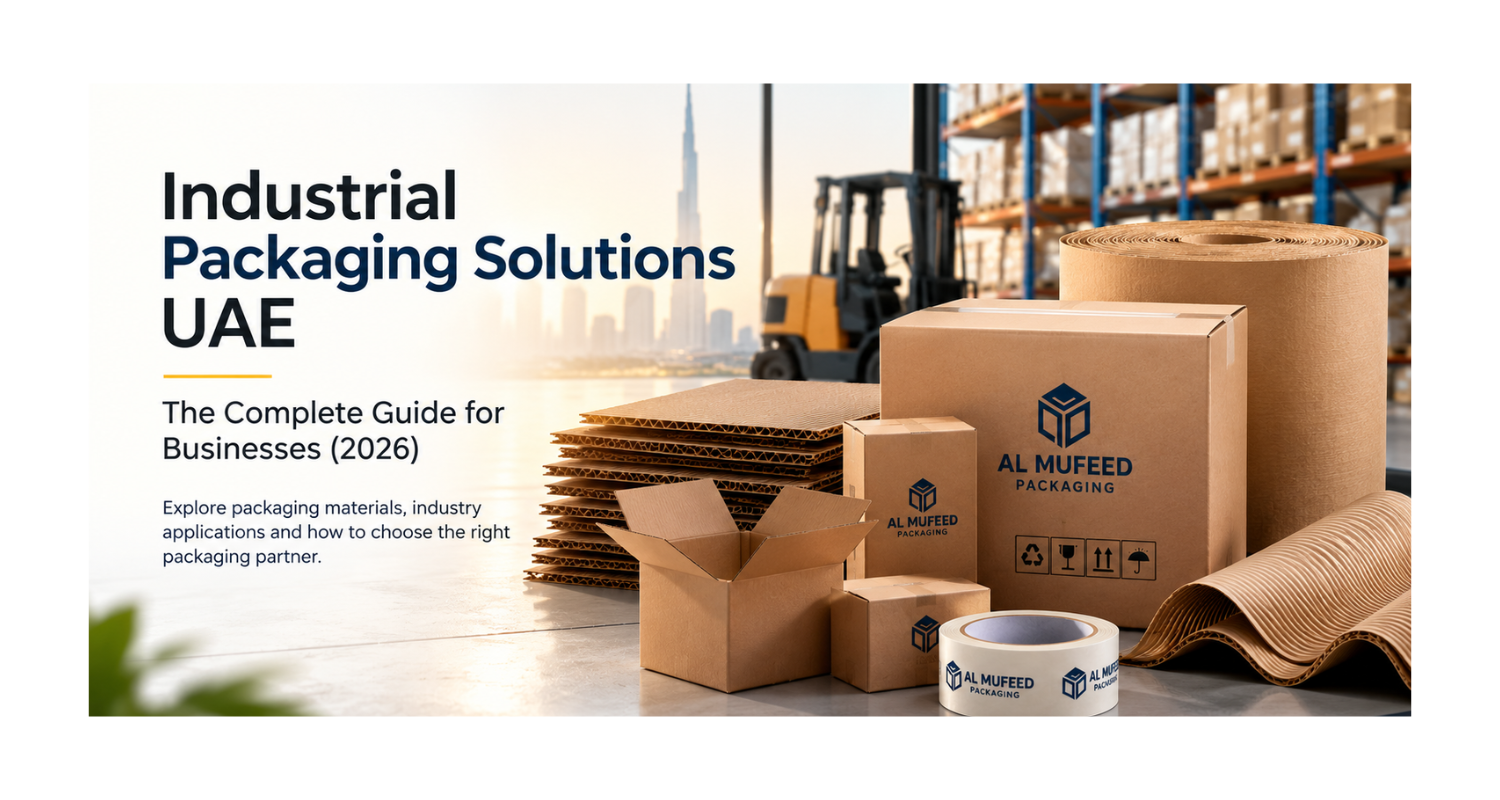
Corrugated Carton Boxes
Corrugated carton boxes are among the most widely used industrial packaging solutions because they offer an excellent balance of strength, durability, and cost-effectiveness. Manufactured using fluted corrugated board sandwiched between linerboards, these boxes provide cushioning that protects products during storage and transportation.
Businesses across retail, manufacturing, electronics, food processing, pharmaceuticals, and logistics rely on corrugated boxes for everyday packaging operations due to their versatility and recyclability.
Corrugated boxes can also be customised in different sizes, board grades, and printing options to meet specific product requirements while supporting branding and efficient logistics.
Common Applications
- E-commerce shipping
- FMCG products
- Food packaging
- Industrial components
- Consumer electronics
- Pharmaceutical packaging
- Export shipments
Want to learn more? Explore our detailed guide: Corrugated Box Manufacturers in UAE: The Complete Business Guide (2026).
Corrugated Cardboard Sheets
Corrugated cardboard sheets provide an additional layer of protection for products during storage, palletisation, and transportation. Rather than serving as standalone packaging, they are commonly used as protective separators between stacked products, preventing scratches, dents, and surface damage.
These sheets are widely used in industries handling glass, ceramics, furniture, automotive parts, metal components, and fragile manufactured goods.
They are available in different thicknesses and board strengths depending on the protection required.
Benefits
- Reduces product damage
- Improves pallet stability
- Lightweight yet durable
- Cost-effective protective solution
- Suitable for custom dimensions
Corrugated Rolls
Corrugated rolls are flexible protective packaging materials designed to wrap products with irregular shapes or delicate surfaces. Their cushioning properties help absorb impacts during transportation while reducing the risk of scratches and abrasions.
Unlike rigid boxes, corrugated rolls can be cut to the required length, making them suitable for businesses handling products of varying sizes.
They are commonly used by manufacturers, warehouses, logistics companies, and exporters seeking adaptable protective packaging.
Typical Uses
- Furniture protection
- Glass products
- Metal components
- Wooden products
- Machinery parts
- Export packaging
Printed Corrugated Packaging
Packaging serves not only as protection but also as a communication tool for businesses. Printed corrugated packaging allows companies to display their brand identity, product information, handling instructions, and regulatory markings directly on the packaging.
High-quality printing improves brand visibility while helping warehouses, distributors, and customers identify products more efficiently.
Businesses often customise packaging with:
- Company logos
- Product branding
- QR codes
- Handling symbols
- Batch information
- Shipping instructions
Printed packaging is particularly valuable for retail, e-commerce, FMCG, and export businesses where packaging influences customer perception and operational accuracy.
Custom Adhesive Tapes
Adhesive tapes are an essential component of industrial packaging systems. Beyond simply sealing boxes, they contribute to package security, tamper evidence, and brand recognition.
Custom-printed adhesive tapes allow businesses to reinforce their branding while ensuring packages remain securely sealed throughout transportation.
Modern industrial tapes are available in different materials and adhesive strengths to suit various packaging environments and product weights.
Businesses commonly choose custom tapes for:
- Brand visibility
- Tamper protection
- Secure carton sealing
- Warehouse identification
- Export shipments
Duplex Board and Specialty Packaging Materials
Many industries require packaging that combines durability with premium presentation. Duplex boards and other specialty packaging materials are widely used for products where visual appeal is as important as structural strength.
These materials are commonly selected for:
- Consumer goods
- Cosmetics
- Food products
- Electronics
- Luxury retail packaging
- Promotional packaging
Specialty boards can also be combined with corrugated structures to create packaging that balances protection, aesthetics, and functionality.
Choosing the Right Packaging Solution
There is no one-size-fits-all approach to industrial packaging. The ideal solution depends on factors such as product characteristics, handling conditions, transportation methods, storage requirements, and branding objectives. Businesses that evaluate these factors carefully can reduce product damage, optimise logistics, and improve overall supply chain efficiency.
Choosing the Right Packaging Material for Your Products
Selecting the right packaging material is one of the most important decisions in any packaging strategy. The ideal material should not only protect products during storage and transportation but also align with business goals such as cost efficiency, sustainability, branding, and customer satisfaction.
Rather than choosing packaging based on price alone, businesses should evaluate the product’s characteristics, shipping conditions, handling requirements, and industry standards.
Below are some of the most commonly used industrial packaging materials and their ideal applications.
Corrugated Board
Corrugated board is one of the most reliable materials for industrial packaging because of its excellent strength-to-weight ratio. Its fluted structure provides cushioning and compression resistance, making it suitable for transporting products safely over long distances. Businesses wanting a deeper technical understanding of board construction can refer to the Fibre Box Handbook, one of the industry’s most widely recognized technical resources.
It is commonly used for shipping cartons, export packaging, warehouse storage, and e-commerce deliveries where product protection is a priority.
Best suited for:
- Electronics
- Food products
- FMCG goods
- Consumer products
- Industrial equipment
- Export shipments
Kraft Paper
Kraft paper is valued for its durability, flexibility, and environmentally friendly properties. It is widely used as wrapping material, protective cushioning, and lightweight packaging for products that require additional surface protection.
As businesses continue to adopt sustainable packaging practices, kraft paper has become a preferred choice for reducing plastic usage while maintaining packaging efficiency.
Common applications include:
- Wrapping products
- Protective interleaving
- Retail packaging
- Paper bags
- Sustainable packaging solutions
Duplex Board
Duplex board combines structural strength with a smooth printable surface, making it suitable for packaging that requires both durability and an attractive presentation.
Businesses frequently use duplex board for products displayed directly to consumers, where packaging contributes to brand perception and product visibility.
Ideal for:
- Consumer goods
- Cosmetics
- Food products
- Pharmaceutical cartons
- Promotional packaging
Protective Packaging Materials
In addition to primary packaging, many products require protective materials that absorb impact and minimise movement during transportation. These materials help reduce the risk of damage, especially for fragile or high-value products.
Protective packaging solutions may include:
- Corrugated partitions
- Corrugated rolls
- Cardboard separators
- Cushioning materials
- Edge protectors
- Protective wraps
Choosing the right protective packaging helps businesses lower return rates, improve customer satisfaction, and reduce replacement costs.
How to Select the Right Packaging Solution
Every product has different packaging requirements. Instead of using a standard packaging approach for all products, businesses should evaluate several factors before deciding on a packaging solution.
Product Weight
Heavy products require stronger board grades and reinforced packaging structures to prevent box failure during handling and transportation.
Product Fragility
Fragile products such as glassware, ceramics, electronics, and precision equipment require additional cushioning and protective inserts to minimise movement and absorb impact.
Transportation Method
Products transported locally may require different packaging compared to goods shipped internationally or exported by sea or air. Longer transit times and multiple handling points often demand more durable packaging solutions.
Storage Conditions
Warehouses with varying humidity, stacking requirements, or extended storage periods may require packaging materials that provide additional strength and moisture resistance.
Branding Requirements
Packaging also serves as a communication tool. Businesses that want to strengthen brand recognition often choose custom printed packaging, branded adhesive tapes, and product-specific packaging designs that create a professional appearance throughout the supply chain.
Sustainability Goals
Many organisations are actively reducing packaging waste and adopting recyclable materials to support environmental initiatives and comply with customer expectations. Selecting sustainable packaging materials can improve both operational efficiency and brand reputation.
Common Packaging Mistakes Businesses Should Avoid
Even high-quality products can be damaged if the packaging strategy is not planned carefully. Recognising common mistakes helps businesses improve efficiency while reducing avoidable costs.
Using Undersized or Oversized Packaging
Packaging that is too small may place unnecessary pressure on products, while oversized packaging allows excessive movement during transportation. Selecting the correct dimensions improves product protection and optimises shipping costs.
Choosing Materials Based Only on Cost
Lower-cost materials may reduce initial expenses but can lead to increased product damage, customer complaints, and replacement costs. Packaging should always be evaluated based on its overall value rather than purchase price alone.
Ignoring Transportation Conditions
Packaging designed for local deliveries may not provide sufficient protection for long-distance or international shipments. Businesses should consider handling frequency, transport modes, and environmental conditions when selecting packaging solutions.
Overlooking Branding Opportunities
Packaging is often the first physical interaction customers have with a business. Plain or inconsistent packaging may miss valuable opportunities to reinforce brand identity and create a professional impression.
Not Planning for Future Growth
As businesses expand, packaging requirements often change. Selecting packaging solutions that can adapt to increased production volumes and evolving product lines helps support long-term operational efficiency.
Industrial Packaging Solutions for Different Industries
Every industry has unique packaging requirements based on product characteristics, transportation methods, regulatory standards, and customer expectations. Choosing packaging that aligns with these requirements helps businesses improve operational efficiency while ensuring products reach their destination safely.
Food & Beverage Industry
Food packaging must protect products from contamination, moisture, and physical damage while maintaining freshness throughout storage and transportation. Packaging should also support efficient handling across warehouses, supermarkets, and distribution centres.
Corrugated packaging is widely used for transporting packaged foods, beverages, fruits, vegetables, and bakery products because it provides excellent strength while remaining lightweight and recyclable.
Packaging priorities include:
- Product protection
- Hygiene
- Moisture resistance
- Easy transportation
- Sustainable materials
E-commerce & Retail
The rapid growth of online shopping has increased the demand for packaging that can withstand multiple handling stages before reaching customers. Products ordered online often pass through fulfilment centres, courier hubs, and delivery vehicles, making durable packaging essential.
Businesses also use packaging to enhance customer experience by incorporating branding, printed boxes, and custom adhesive tapes that reinforce brand identity.
Common packaging requirements:
- Lightweight shipping cartons
- Custom-sized boxes
- Protective inserts
- Printed packaging
- Tamper-resistant sealing
Electronics Industry
Electronic products require packaging that protects sensitive components from impact, vibration, and external pressure during transportation.
Corrugated boxes combined with protective cushioning and partitions help minimise movement inside the package, reducing the risk of damage to valuable equipment.
Typical products include:
- Consumer electronics
- Electrical accessories
- Computer components
- Industrial control systems
- Home appliances
Pharmaceutical & Healthcare
Pharmaceutical products require secure packaging that supports product integrity during storage and distribution. Packaging should protect products from damage while allowing clear identification through labels and handling instructions.
Businesses often choose packaging solutions that maintain product quality throughout the supply chain while complying with industry-specific requirements.
Common applications include:
- Medical devices
- Healthcare supplies
- Pharmaceutical products
- Laboratory equipment
FMCG (Fast-Moving Consumer Goods)
FMCG businesses require packaging that supports high production volumes, efficient warehouse operations, and rapid product distribution. Since products move quickly through the supply chain, packaging should combine durability with cost efficiency.
Printed corrugated packaging also helps improve product identification during distribution while strengthening brand visibility on retail shelves.
Typical FMCG products include:
- Household goods
- Personal care products
- Cleaning products
- Packaged foods
- Consumer essentials
Manufacturing & Industrial Equipment
Manufacturing companies often transport machinery components, spare parts, fabricated products, and industrial equipment that vary significantly in size and weight.
These products require packaging capable of withstanding long transportation distances, warehouse handling, and export conditions without compromising product safety.
Packaging solutions may include:
- Heavy-duty corrugated cartons
- Protective partitions
- Corrugated sheets
- Corrugated rolls
- Custom industrial packaging
Export & Logistics
Export shipments often involve multiple transportation methods, including road, sea, and air freight. Packaging for exports must withstand extended transit times, repeated handling, and varying environmental conditions.
Businesses exporting products from the UAE should choose packaging solutions that provide structural strength, efficient palletisation, and reliable product protection throughout international shipping, in line with guidance published by Dubai Customs.
Key considerations include:
- Compression strength
- Moisture resistance
- Stackability
- Export documentation compatibility
- Efficient pallet loading
Sustainable Packaging: The Future of Industrial Packaging
Sustainability has become an important consideration for businesses across industries. Customers, regulatory bodies, and global markets increasingly expect organisations to reduce waste and adopt environmentally responsible packaging practices.
Modern industrial packaging focuses on balancing durability, functionality, and environmental responsibility without compromising product protection.
Businesses are adopting sustainable practices by:
- Using recyclable corrugated materials, often sourced from forests certified by the Forest Stewardship Council (FSC)
- Optimising packaging sizes to reduce waste
- Minimising unnecessary packaging layers
- Improving packaging efficiency to lower transportation emissions
- Choosing materials that support circular economy initiatives
Sustainable packaging not only benefits the environment but can also reduce material costs, improve operational efficiency, and strengthen brand reputation. For a closer look at what happens to corrugated packaging once it reaches its destination, see our article on what happens to corrugated boxes after delivery.
Why Choose Al Mufeed Packaging?
Selecting the right packaging partner is just as important as selecting the right packaging material. Businesses need a manufacturer that understands product requirements, maintains consistent quality standards such as ISO 9001, and delivers solutions that support long-term operational efficiency. Our guide on how to choose the best packaging company in the UAE covers this in more detail.
At Al Mufeed Packaging, we provide customised industrial packaging solutions designed to meet the diverse needs of businesses across the UAE. Our focus is on delivering reliable packaging products that combine durability, functionality, and consistent quality for a wide range of industries.
Our capabilities include:
- Corrugated carton boxes
- Corrugated cardboard sheets
- Corrugated rolls
- Printed corrugated packaging
- Custom adhesive tapes
- Duplex board and specialty packaging solutions
With a commitment to quality manufacturing, timely delivery, and customer-focused service, we help businesses choose packaging solutions that support efficient operations and protect products throughout the supply chain. Learn more in our broader Packaging Manufacturers in UAE: Business Guide (2026).
Frequently Asked Questions (FAQs)
What are industrial packaging solutions?
Industrial packaging solutions are packaging systems designed to protect, store, transport, and distribute products throughout the supply chain. They include corrugated boxes, cardboard sheets, corrugated rolls, printed packaging, adhesive tapes, and other materials that help businesses improve product protection and logistics efficiency.
Why is corrugated packaging widely used in industrial applications?
Corrugated packaging offers an excellent balance of strength, lightweight construction, and cost-effectiveness. Its fluted design provides cushioning that helps protect products from impacts during storage and transportation while remaining recyclable and suitable for a wide range of industries.
How do I choose the right packaging solution for my business?
The right packaging solution depends on several factors, including product size, weight, fragility, transportation method, storage conditions, branding requirements, and sustainability goals. Evaluating these factors helps businesses select packaging that improves both product protection and operational efficiency.
Which industries benefit from industrial packaging?
Industrial packaging is used across numerous industries, including manufacturing, food and beverage, pharmaceuticals, electronics, automotive, retail, e-commerce, logistics, and export businesses. Each industry requires packaging designed to meet its specific handling, storage, and transportation needs.
What is the difference between corrugated boxes and cardboard boxes?
Corrugated boxes are made with a fluted layer between linerboards, providing additional strength and cushioning for transporting products. Cardboard boxes are generally made from a single layer of paperboard and are more suitable for lightweight products and retail packaging.
Can industrial packaging be customised?
Yes. Industrial packaging can be customised to match product dimensions, weight, branding requirements, printing specifications, and handling needs. Custom packaging helps improve product protection while enhancing brand visibility throughout the supply chain.
Is corrugated packaging environmentally friendly?
Corrugated packaging is considered one of the most sustainable packaging options because it is recyclable, reusable, and manufactured using renewable paper-based materials. Many businesses choose corrugated packaging as part of their sustainability initiatives.
Why is packaging important for export shipments?
Export shipments often involve multiple stages of handling and longer transit times. Strong industrial packaging helps minimise product damage, improves stacking efficiency, protects goods from transportation risks, and supports safe delivery to international destinations.
How does packaging improve supply chain efficiency?
Well-designed packaging simplifies storage, palletisation, transportation, and inventory handling. Standardised packaging sizes reduce wasted space, improve warehouse operations, and help businesses optimise logistics costs.
Why should businesses work with an experienced packaging manufacturer?
An experienced packaging manufacturer understands industry requirements, recommends suitable packaging solutions, maintains consistent quality, and provides customised products that support efficient business operations and long-term growth.
Conclusion
Industrial packaging is an essential part of modern business operations, influencing product protection, transportation efficiency, customer satisfaction, and overall supply chain performance. Selecting the right packaging solution requires careful consideration of product characteristics, industry requirements, logistics, and sustainability objectives.
Whether your business requires corrugated carton boxes, cardboard sheets, corrugated rolls, printed packaging, or customised packaging solutions, investing in high-quality industrial packaging helps reduce product damage, improve operational efficiency, and strengthen your brand’s reputation.
At Al Mufeed Packaging, we are committed to delivering reliable and customised industrial packaging solutions that support businesses across the UAE. With a focus on quality manufacturing, innovative packaging solutions, and customer satisfaction, we help organisations choose packaging that meets today’s operational needs while preparing for future growth.
Looking for reliable industrial packaging solutions in the UAE? Contact Al Mufeed Packaging to discuss your packaging requirements and discover solutions tailored to your business.

Pharmaceutical Packaging in the UAE: A.
What Is Pharmaceutical Packaging, and Why Does It Matter? Packaging in the pharmaceutical industry has four.
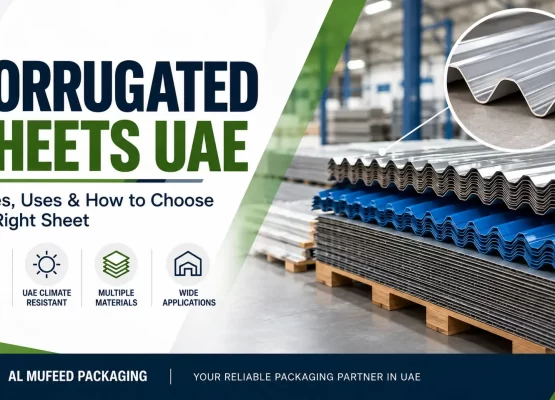
Corrugated Sheets UAE: Types, Uses &.
The UAE is hard on building materials. Summer heat passes 45°C. UV is relentless. Coastal air.