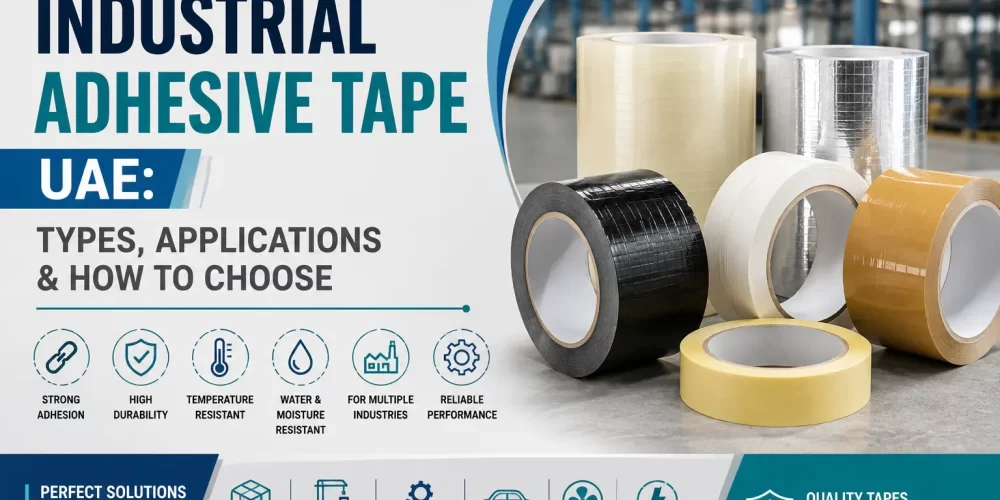
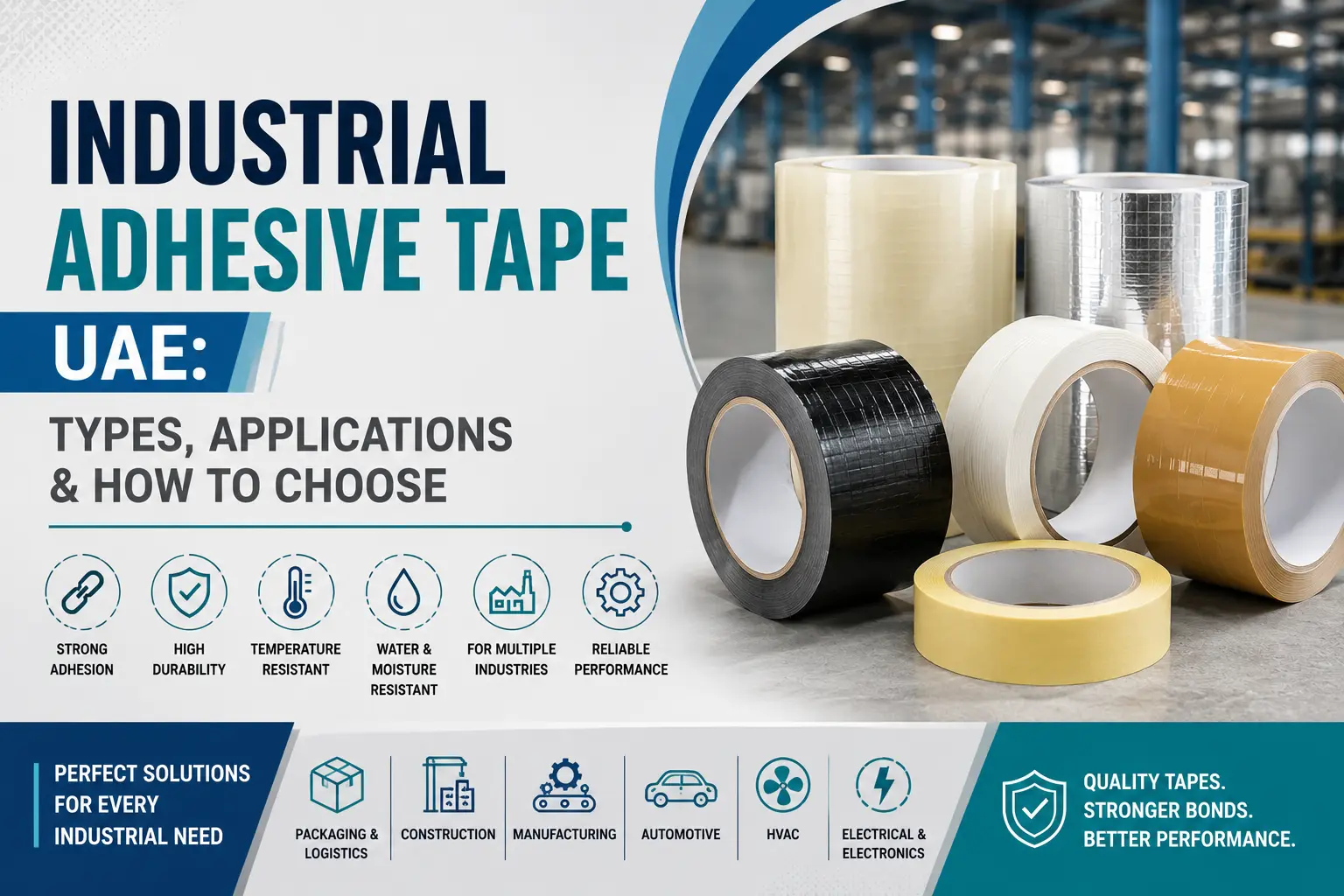
Industrial adhesive tape is an essential solution for businesses that need reliable bonding, sealing, mounting, protection, or joining without relying solely on mechanical fasteners. From manufacturing and construction to packaging, logistics, automotive, and maintenance applications, the right adhesive tape can improve efficiency while providing a clean and practical bonding solution.
Businesses in the UAE often work in demanding environments where heat, humidity, dust, transportation, and heavy-duty usage can affect packaging and materials. Choosing an industrial adhesive tape based on the application, surface, required strength, and environmental conditions is therefore important.
In this guide, we explore the types of industrial adhesive tape available in the UAE, their common applications, benefits, and the factors businesses should consider when selecting the right tape.
What Is Industrial Adhesive Tape?
Industrial adhesive tape is a pressure-sensitive or specialized tape designed to bond, seal, join, protect, mask, mount, or reinforce materials used in commercial and industrial environments.
Unlike basic household tapes, industrial tapes are manufactured for specific performance requirements. Depending on the product, they may offer higher adhesion, better tensile strength, temperature resistance, moisture resistance, or durability. Adhesive performance for these products is commonly evaluated using standardized methods such as ASTM D6195, which measures the loop tack strength of pressure-sensitive tapes.
Industrial adhesive tapes can be used on materials such as:
- Cardboard
- Corrugated packaging
- Plastic
- Glass
- Metal
- Wood
- Foam
- Paper
- Painted surfaces
- Various composite materials
The appropriate tape depends on the surface and the purpose for which it is being used.
Types of Industrial Adhesive Tape
Different industrial applications require different tape constructions and adhesive properties. Some of the most commonly used types include the following.
1. Double-Sided Adhesive Tape
Double-sided adhesive tape has adhesive on both sides and is designed to join two surfaces without leaving the tape visibly exposed.
It is commonly used for:
- Mounting
- Signage
- Displays
- Interior applications
- Component assembly
- Lightweight bonding
Double-sided tapes are available in different thicknesses and adhesive formulations, making them suitable for a range of industrial applications.
2. Foam Adhesive Tape
Foam tapes use a foam carrier that can help compensate for minor surface irregularities while providing strong adhesion.
They are commonly used for:
- Mounting panels
- Signboards
- Displays
- Interior components
- Insulation-related applications
- General industrial assembly
Foam tape can be particularly useful where the two surfaces are not perfectly flat.
3. Filament Tape
Filament tape is reinforced with strong fibres, giving it greater tensile strength than many standard packaging tapes.
It is commonly used for:
- Bundling
- Reinforcing packages
- Securing heavy cartons
- Pallet-related applications
- Strapping and holding materials
For businesses handling heavy or bulky packages, selecting a tape with appropriate reinforcement can help improve package security during transportation.
4. Duct Tape
Duct tape is a versatile tape commonly used for temporary repairs, bundling, sealing, maintenance, and general industrial applications.
Its usefulness comes from its combination of flexibility, adhesion, and strength.
However, businesses should select a duct tape according to the actual environment and application rather than assuming that one product is suitable for every industrial requirement.
5. Masking Tape
Masking tape is commonly used when a temporary adhesive bond or clean separation is required.
Typical applications include:
- Painting
- Surface protection
- Marking
- Temporary holding
- Maintenance work
- Manufacturing processes
Different masking tapes have different levels of adhesion and temperature resistance, so selection should depend on the surface and working conditions.
6. Aluminium Foil Tape
Aluminium foil tape combines an adhesive layer with an aluminium backing. It is commonly used in applications involving HVAC systems, insulation, ductwork, and surface protection.
Depending on the product specification, aluminium tapes can provide useful resistance against moisture and temperature exposure.
7. Specialty Industrial Tapes
Some industrial applications require specialized tapes designed for particular environments or performance requirements.
These may include tapes designed for:
- High-temperature environments
- Electrical applications
- Heavy-duty mounting
- Surface protection
- Insulation
- Sealing
- Automotive applications
- Construction applications
For specialized requirements, businesses should consider the manufacturer’s technical specifications rather than selecting tape based only on appearance or price.
Applications of Industrial Adhesive Tape in the UAE
Industrial adhesive tape has applications across several industries in the UAE.
Packaging and Logistics
Packaging companies, warehouses, distributors, retailers, and e-commerce businesses use adhesive tapes for carton sealing, bundling, reinforcement, and package protection.
For businesses primarily focused on packaging, choosing the correct tape can be especially important because packages may be exposed to handling, stacking, transportation, and storage conditions.
You can also explore our adhesive tape solutions in the UAE for a broader overview of adhesive tape types and applications.
Construction
Construction projects use adhesive tapes for temporary fixing, masking, surface protection, sealing, and various installation-related applications.
The tape selected should match the surface and environmental conditions of the project. Outdoor applications may require stronger resistance to moisture, temperature variation, and exposure.
Manufacturing
Manufacturing facilities use industrial tapes for assembly, mounting, bundling, temporary holding, component positioning, and surface protection.
Using an appropriate adhesive tape can simplify certain processes and reduce the need for mechanical fastening in suitable applications.
Automotive Applications
Automotive manufacturing and maintenance operations may use specialized adhesive tapes for mounting, insulation, wiring-related applications, surface protection, and component attachment.
Because automotive environments can involve vibration, temperature changes, and exposure to various materials, tape specifications are particularly important.
HVAC and Electrical Applications
Certain specialized tapes are used for HVAC ducting, insulation, electrical applications, and equipment maintenance.
For these applications, factors such as temperature resistance, insulation properties, moisture resistance, and durability need to be considered.
Warehousing and Distribution
Warehouses use adhesive tape for carton sealing, bundling, labeling-related processes, and package reinforcement.
For high-volume operations, the tape should also be compatible with the company’s manual or automated packaging process.
Benefits of Using Industrial Adhesive Tape
Choosing the appropriate industrial tape can provide several practical advantages.
Strong and Reliable Bonding
Industrial tapes can provide reliable adhesion when matched correctly to the surface and application.
Easy Application
Many adhesive tapes can be applied quickly without requiring drilling, screws, or additional fastening equipment.
Clean Appearance
Tape can provide a relatively neat bonding or mounting solution where visible mechanical fasteners may not be desirable.
Flexible Applications
Different tape constructions are available for packaging, mounting, sealing, insulation, masking, and other industrial requirements.
Improved Operational Efficiency
In suitable applications, adhesive tape can simplify assembly, packaging, and maintenance processes.
Reduced Material Damage
Some tape-based applications can avoid drilling or puncturing surfaces, which can be useful for certain materials.
How to Choose the Right Industrial Adhesive Tape
Selecting industrial adhesive tape should start with the application rather than the tape itself. Consider the following factors.
1. Identify the Application
First determine what the tape needs to do.
Is it required for:
- Sealing?
- Mounting?
- Joining?
- Bundling?
- Reinforcement?
- Masking?
- Surface protection?
- Insulation?
The answer will help narrow down the appropriate tape type.
2. Consider the Surface
Adhesive performance can vary depending on the material being bonded.
Consider whether the surface is:
- Smooth or rough
- Porous or non-porous
- Painted or unpainted
- Clean or contaminated
- Flexible or rigid
A tape suitable for cardboard may not necessarily be the right choice for metal, glass, plastic, or painted surfaces.
3. Determine the Required Strength
Different applications require different levels of bonding strength.
Lightweight applications may require a standard adhesive tape, while heavy-duty mounting or reinforcement may require a stronger or reinforced construction.
Avoid selecting tape based only on the word “industrial.” Check the product’s technical specifications for the intended load and application.
4. Consider Temperature
The operating temperature can influence adhesive performance.
For UAE applications, businesses should pay particular attention to temperature exposure, especially when tape is used in warehouses, vehicles, outdoor locations, or industrial facilities.
If the application involves high temperatures, select a tape specifically designed for the required temperature range.
5. Consider Moisture and Environmental Exposure
Humidity, moisture, dust, sunlight, and outdoor exposure can affect certain adhesive tapes.
For outdoor or demanding environments, look for products whose specifications match the expected exposure conditions.
6. Check the Required Tape Thickness
Tape thickness can influence bonding, cushioning, conformability, and overall performance.
For example, foam tape may be beneficial where the tape needs to accommodate minor gaps or uneven surfaces, while thinner tapes may be preferred where a low-profile bond is required.
7. Consider Application Method
Think about how the tape will be applied.
Will it be:
- Applied manually?
- Applied using a dispenser?
- Used on an automated packaging line?
- Cut into specific lengths?
- Applied continuously?
The tape should be compatible with the company’s workflow and equipment.
Industrial Adhesive Tape vs Standard Packaging Tape
Industrial adhesive tape and standard packaging tape may look similar, but they can be designed for different purposes.
Standard packaging tape is primarily intended for routine carton sealing and general packaging.
Industrial adhesive tape can be engineered for more specific requirements such as mounting, reinforcement, high-temperature exposure, surface protection, insulation, or specialized bonding.
For businesses handling regular carton sealing, a suitable packaging tape may be sufficient. For demanding industrial applications, however, the tape should be selected based on the required performance characteristics.
For packaging-focused requirements, businesses can also explore custom adhesive tape solutions when branding or application-specific requirements are important.
Common Mistakes When Choosing Industrial Adhesive Tape
Businesses can encounter performance problems when tape is selected without considering the actual application.
Choosing Based Only on Price
The cheapest tape may not provide the required adhesion or durability. Total cost should be evaluated based on performance and usage.
Ignoring the Surface
Different surfaces have different adhesion characteristics. Always consider the material being bonded.
Using Packaging Tape for Every Application
Packaging tape is not automatically suitable for mounting, insulation, construction, or specialized industrial applications.
Ignoring Environmental Conditions
Temperature, moisture, sunlight, dust, and other environmental factors can influence adhesive performance.
Not Testing Before Large-Scale Use
For important industrial applications, testing the tape on the actual surface and under expected conditions can help confirm suitability before full-scale adoption. Standardized methods published by the Pressure Sensitive Tape Council (PSTC) can be a useful reference point when evaluating tape performance.
Why Quality Matters When Choosing Industrial Adhesive Tape
Industrial tape often plays an important role in packaging, assembly, protection, and transportation. Poor-quality or unsuitable tape can result in weak bonds, package failures, rework, product damage, or unnecessary replacement costs.
A reliable supplier should be able to help businesses identify suitable products based on their application, surface, required strength, and operating conditions.
For businesses looking for broader industrial packaging solutions in the UAE, adhesive tape can form one part of a larger packaging system. See our guide to industrial packaging solutions in the UAE for more detail.
Why Choose Al Mufeed Packaging?
Al Mufeed Packaging provides packaging solutions for businesses looking for practical and reliable materials for their operational requirements.
When selecting adhesive tape, businesses can evaluate their application requirements and choose a solution based on the type of surface, bonding requirement, environmental conditions, and intended use.
For businesses that require packaging products beyond adhesive tape, Al Mufeed also provides solutions such as corrugated carton boxes for different packaging requirements.
Conclusion
Choosing the right industrial adhesive tape is about more than selecting a tape with strong adhesion. The correct product depends on the application, surface, required strength, temperature, moisture exposure, tape construction, and method of application.
From packaging and logistics to construction, manufacturing, automotive, HVAC, and maintenance, different applications require different tape characteristics.
Businesses in the UAE should therefore evaluate their actual requirements before purchasing industrial adhesive tape. Selecting the appropriate product can help improve packaging security, operational efficiency, bonding performance, and long-term reliability.
If you are unsure which type of industrial adhesive tape is appropriate for your application, reviewing the technical specifications and discussing your requirements with a packaging supplier can help you make a more informed decision.

Corrugated Packaging Boxes UAE: The Complete.
Introduction Every product begins its journey long before it reaches the customer. During transportation, storage, warehouse.
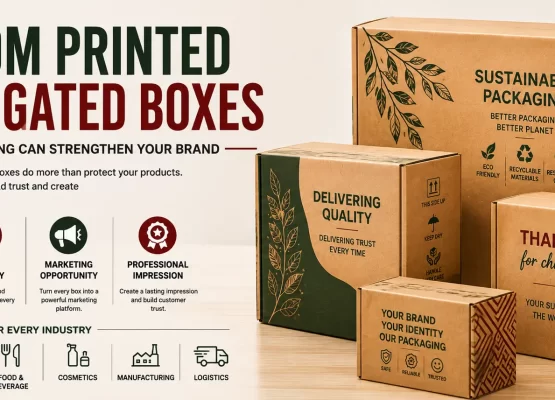
Custom Printed Corrugated Boxes: How Packaging.
Packaging does more than protect products during transportation. It can also influence how customers perceive a.